
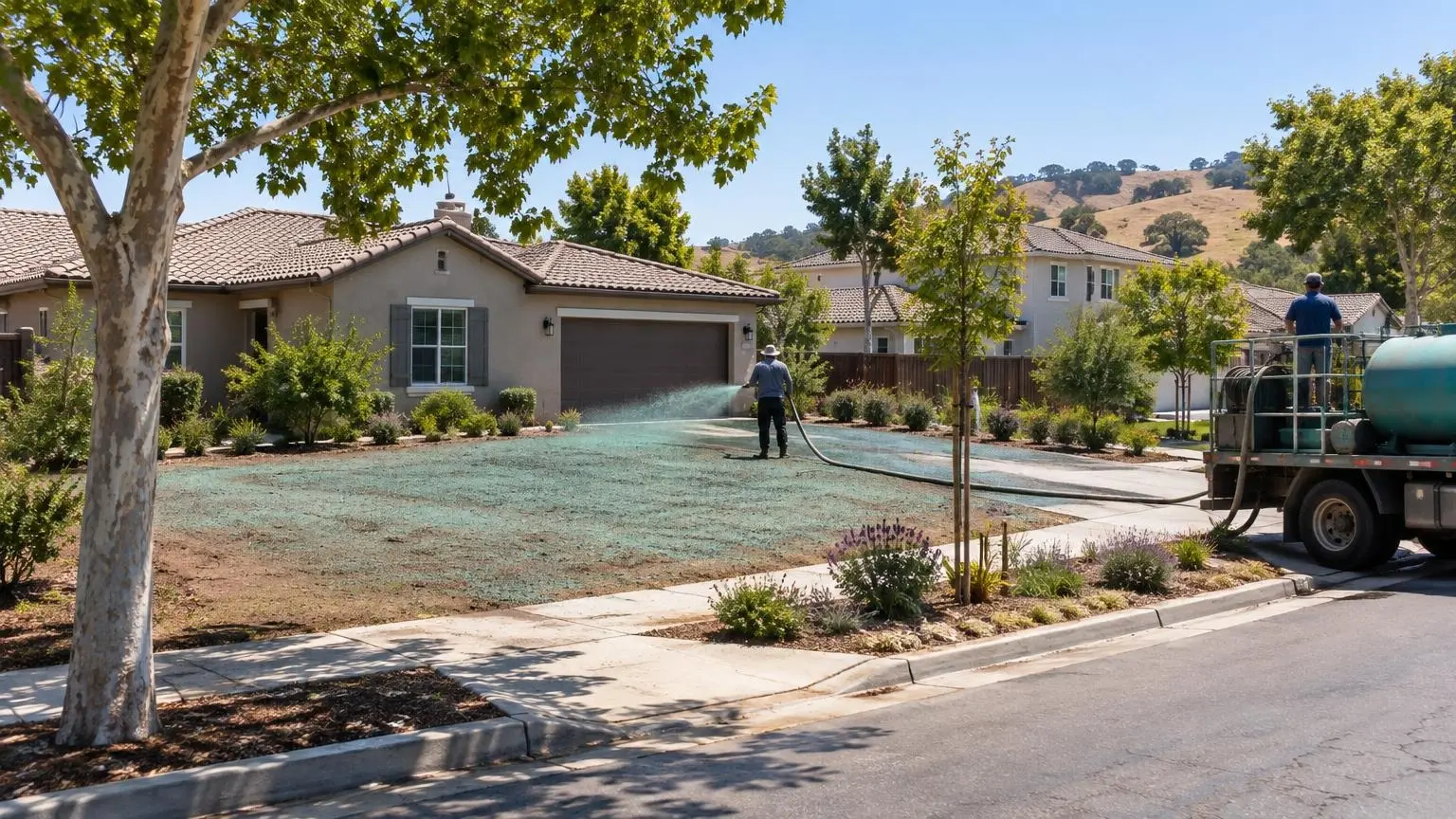
Lots, basins and open acreage
Builder & Commercial Hydroseeding in Sacramento, CA
Large-area seeding for construction sites, commercial grounds and public works, scheduled around inspections and storms.
- No charge to walk your lot, and every quote in writing
- Prep, seed, mulch and erosion control priced as separate lines
- A written watering schedule for the season you seed in
Seeding at the Scale of a Subdivision
Builder & commercial hydroseeding in Sacramento covers the ground that homeowners never see: rough-graded lots waiting for houses, detention basins and bioswales, the shoulders of new streets, utility corridors, school and park fields, and the open areas around warehouses and office buildings. Among hydroseeding contractors, this is work measured in acres instead of square feet, and the reasons for doing it are as often about stormwater compliance and inspection sign-off as about how it looks.
Why large sites seed instead of sod
On a big site, hydroseed is the only practical way to cover ground quickly. A truck with a large tank and a long hose or deck cannon can reach areas a sod crew would need days to haul pallets into, and it can coat a slope or basin side in one pass. The wood fiber mulch shields seed from sun and raindrop impact, and the tackifier holds it on graded ground. For temporary cover on a lot that will be dug up again in a year, we spray a fast-establishing cover mix. For final stabilization, we spray the permanent mix the plans call for.
The permit side of the job
California's State Water Resources Control Board requires coverage under its Construction General Permit for any project disturbing an acre or more of soil, and also for smaller pieces of a bigger development whose combined disturbance reaches an acre. The current permit, Order 2022-0057-DWQ, took effect on September 1, 2023. Under that permit, the site's stormwater plan lists how bare soil will be covered, and seeding and mulching are among the standard tools. Locally, the City of Sacramento requires a grading permit once a project moves 50 cubic yards or cuts or fills more than 2 feet, and unincorporated Sacramento County draws the line at 350 cubic yards or an acre of clearing. We work from the site's plan and specifications, spray what is specified, and give the superintendent or stormwater lead what they need to show the work was done.
Timing on valley jobs
Sacramento's rain arrives almost entirely from November through April, and the city sediment control manual names mid-October through mid-April as the best window for permanent planting. Most builders want slopes, basins and open lots seeded before the first big storms, which makes September and October the busiest stretch. The same manual asks for hydroseed and hydromulch to go down at least a day ahead of forecast rain so the mulch can set, and we watch the forecast closely for that reason. Seeding during the dry months is still common on deadline-driven jobs, but it needs a water truck or temporary irrigation, or the seed will sit dormant until fall.
Soil on graded ground
Mass grading strips the topsoil off a lot, and on the eastern valley floor what is left is often the dense, clay-rich layer of San Joaquin series soil that sits above the hardpan. The USDA describes it as very slow to take in water and quick to shed it. Seed sprayed onto that surface without any roughening or amendment tends to run off with the first storm or bake in the sun. Where specs allow, we ask for the surface to be track-walked or scarified, and we raise mulch rates or add a bonding agent on harder ground.
What we spray
Commercial jobs range from simple seed-and-mulch to multi-pass applications: seed and fertilizer first, then a heavier mulch coat; bonded fiber matrix on cut slopes; and native or erosion-control mixes in basins and open space. Some sites want turf-quality lawn areas around buildings and along frontage, and those get the same soil prep as a residential lawn. On landscape-heavy commercial jobs we coordinate with the landscape and irrigation contractor so seeding happens after irrigation is tested and before final walkthrough.
Choosing between hydroseeding companies on a bid
When comparing bids, look past the price per acre. Check the mulch rate in pounds per acre, whether bonded fiber matrix is included on slopes, the seed mix and its source, whether fertilizer and tackifier are part of the price, how many mobilizations are included, and who supplies water. Two numbers that look far apart are often covering different work. We spell those items out so you can compare like with like.
Water and access on big sites
A hydroseeder needs a lot of water, so a hydrant meter, a water truck or an on-site source has to be lined up before spray day. Long slopes and basins far from a road may need extra hose runs, which affects time and price. We sort this out on the site walk rather than on the morning of the job, so the crew is not waiting on a meter while the forecast closes in.
Working with your crews
We can schedule in phases as lots finish grading, return for touch-ups after inspections, and spray areas left bare when other trades pull out. Access, water source and staging all get settled on the walk so nothing surprises anyone on spray day. As hydroseeding companies go, we keep our estimates itemized by area and mix so they line up with your schedule of values. Call (916) 249-7160 to set up a site walk.
Commercial Seeding Work
Typical areas and applications on builder and commercial jobs.
Lot and pad stabilization
Temporary or permanent cover on graded lots waiting for vertical construction.
Detention basins and bioswales
Basin floors and side slopes seeded with mixes suited to wet and dry cycles.
Roadside and frontage seeding
Shoulders, medians and frontage strips along new streets.
Cut and fill slopes
Hydromulch or bonded fiber matrix on engineered slopes.
Commercial lawn areas
Turf around offices, schools, parks and HOA common areas.
Phased and touch-up seeding
Return trips as lots finish or after inspection punch lists.
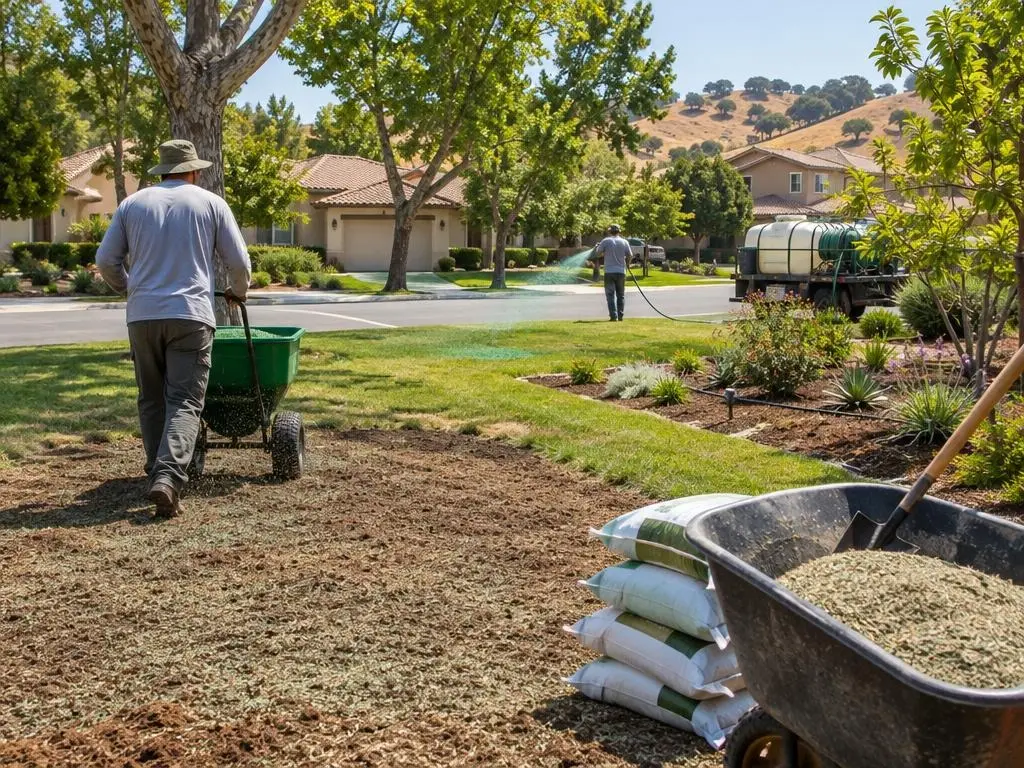
Typical Large-Area Hydroseeding Costs
| Job | Typical range (source) |
|---|---|
| Hydroseeding per acre (LawnStarter) | $2,136 to $4,897 |
| Hydroseeding per acre (Fixr) | $2,000 to $4,000 |
| 1 acre hydroseeded (HomeAdvisor) | $2,600 to $8,700 |
| 1 acre hydroseeded (HomeGuide) | $5,000 to $8,500 |
| Per-acre bids on a 2023 city park hydroseeding job (North Little Rock, AR) | $2,595 and $3,325 |
| Wood-fiber hydromulch, installed (2025 DOT erosion pay items), for every 1,000 sq ft | $98 |
Consumer guides and the 2023 municipal bid are national reference points, not Sacramento quotes. Specs, mulch rate, access, water source and phasing change the number; the written bid for your site is what gets invoiced.
How a Site Gets Seeded
1. Plans and walk
We review specs, the stormwater plan and the areas to seed, and walk access and water.
2. Itemized bid
Areas, mixes and mulch rates broken out to match your schedule of values.
3. Surface ready
Grading finished, surface roughened or track-walked where needed.
4. Apply
Seed, fertilizer and mulch or BFM sprayed in one or more passes.
5. Follow-up
Touch-ups after storms or inspections and phased returns as lots finish.
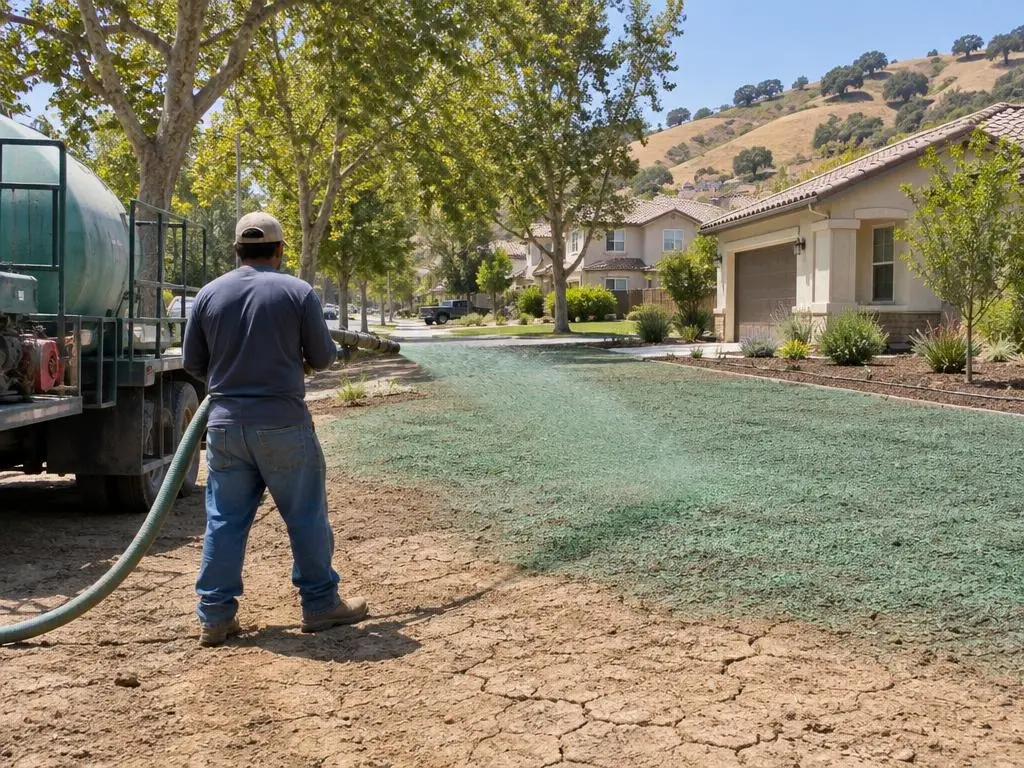
Why Choose Us for Builder & Commercial Hydroseeding
Built around your schedule
Phased seeding as lots finish, not one trip that leaves half the site bare.
Spec-driven
We spray the mix and rate on the plans and document the work.
Weather-watched
Spray dates set ahead of forecast storms so mulch has time to set.
Bids that line up
Itemized by area and application for easy comparison.
Builder & Commercial Hydroseeding Questions
Does my project need a state stormwater permit?
In California, a project that disturbs an acre or more needs coverage under the State Water Board's Construction General Permit, and so does a smaller piece of a larger plan that crosses that line. Your engineer or stormwater consultant handles the filing; we install the seeding and erosion measures the plan calls for.
Temporary or permanent seed on a lot that is not built yet?
If the lot will be dug up within a season or two, a fast cover mix with mulch is usually enough. Areas that will stay open, like basins and slopes, should get the permanent mix the plans specify.
Can you seed in summer without rain?
Yes, if there is water. A water truck or temporary irrigation keeps the mulch damp; without it, seed often waits until the fall rains to germinate.
What if the plans do not specify a seed mix?
We work from the specs on your plans when they exist. If there are none, we recommend a mix and mulch rate for the slope and soil and put it in writing.
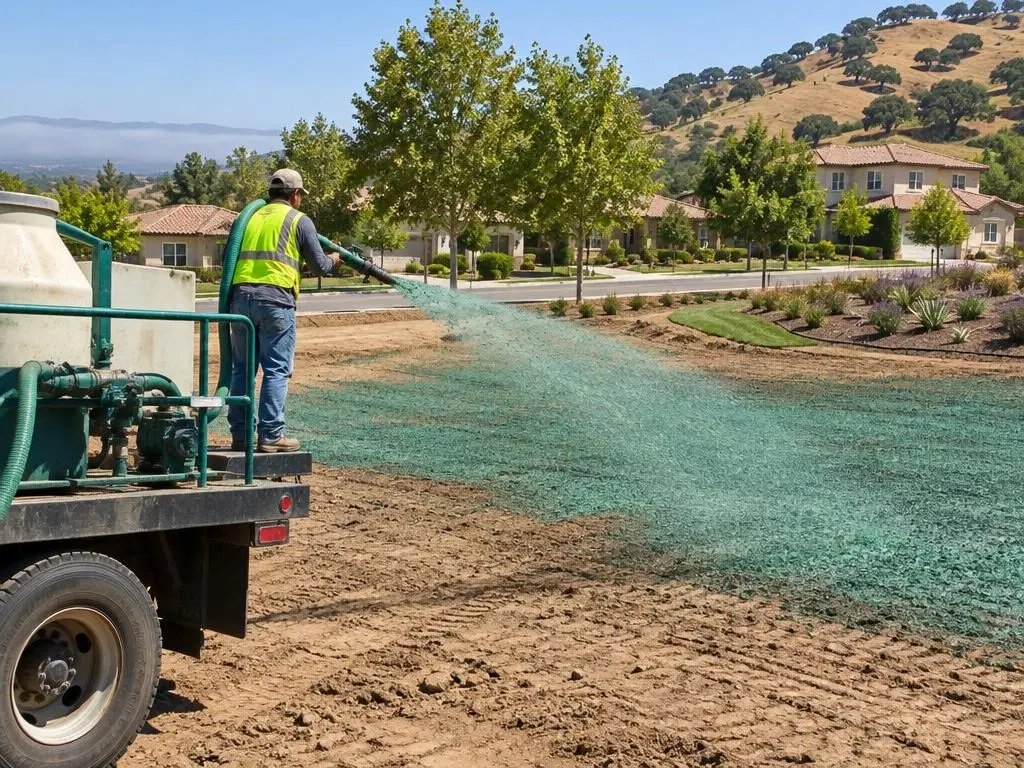
Builder & Commercial Hydroseeding Service Areas
- Hydroseeding in Sacramento, CA
- Hydroseeding in Elk Grove, CA
- Hydroseeding in Roseville, CA
- Hydroseeding in Folsom, CA
- Hydroseeding in Rancho Cordova, CA
- Hydroseeding in Citrus Heights, CA
- Hydroseeding in Lincoln, CA
- Hydroseeding in Rocklin, CA
- Hydroseeding in Davis, CA
- Hydroseeding in West Sacramento, CA
- Hydroseeding in Woodland, CA
- Hydroseeding in El Dorado Hills, CA
- Hydroseeding in Granite Bay, CA
- Hydroseeding in Fair Oaks, CA
- Hydroseeding in Carmichael, CA
- Hydroseeding in Orangevale, CA
- Hydroseeding in Loomis, CA
- Hydroseeding in Auburn, CA
- Hydroseeding in Cameron Park, CA
- Hydroseeding in Antelope, CA
- Hydroseeding in Rio Linda, CA
- Hydroseeding in Wilton, CA
- Hydroseeding in Rancho Murieta, CA
Get a Builder & Commercial Hydroseeding Estimate
Site walks and itemized bids for builders and property managers.