
The work under the lawn
Yard Grading & Soil Prep in Sacramento, CA
Shaping, loosening and building up the soil so water drains away and roots have somewhere to go.
- No charge to walk your lot, and every quote in writing
- Prep, seed, mulch and erosion control priced as separate lines
- A written watering schedule for the season you seed in
Grade and Soil Decide How a Lawn Does
Yard grading & soil prep in Sacramento is the dirt work that comes before any good lawn: moving and shaping soil so the yard drains, loosening ground that equipment packed hard, and bringing in topsoil where the native soil is thin or poor. We do it ahead of our own hydroseeding and for homeowners and landscapers getting a yard ready for sod or planting. Land grading on a larger lot and fine grading on a small backyard follow the same idea: get water moving the right way, then make the top few inches easy for roots.
The soil we usually find
Much of the eastern Sacramento Valley is San Joaquin series soil. The USDA describes a brown loam surface over a sharp jump in clay content, with a cemented hardpan below that, typically 20 to 40 inches down, and it rates the series as very slowly permeable with medium to very high runoff. On a residential lot that means water that soaks in has nowhere to go, so low spots stay wet for days after a storm while the top of the yard dries out. Builder lots add another layer: the topsoil may have been stripped and the surface compacted by graders and trucks. On older lots, years of foot traffic and sprinkler runoff do the same thing more slowly.
Grading so water leaves
The goal is simple: a steady fall away from the foundation and toward a street, swale or drain, with no pockets that hold water. We shoot grades, cut high spots, fill low ones with compacted soil, and shape the surface so runoff moves across the yard without picking up speed. Where a yard cannot drain to the street because of a neighbor's grade or a walled backyard, the answer is often a shallow swale or a drain line. When a lot needs it, the same crew that grades the yard digs and trenches for drainage too: French drains, catch basins and downspout lines, backfilled so they do not settle into a new low spot.
Topsoil and amendments
Where the yard has been scraped to subsoil, or the surface is mostly clay, imported topsoil gives seed a better start. We bring in a screened loam or a soil and compost blend, spread it, and work it into the native surface so there is no abrupt layer for water to perch on. Where the existing soil is decent but tight, compost tilled into the top few inches may be enough. We will tell you which one your yard needs, because hauling in more soil than necessary only adds cost.
Fine grading for seed or sod
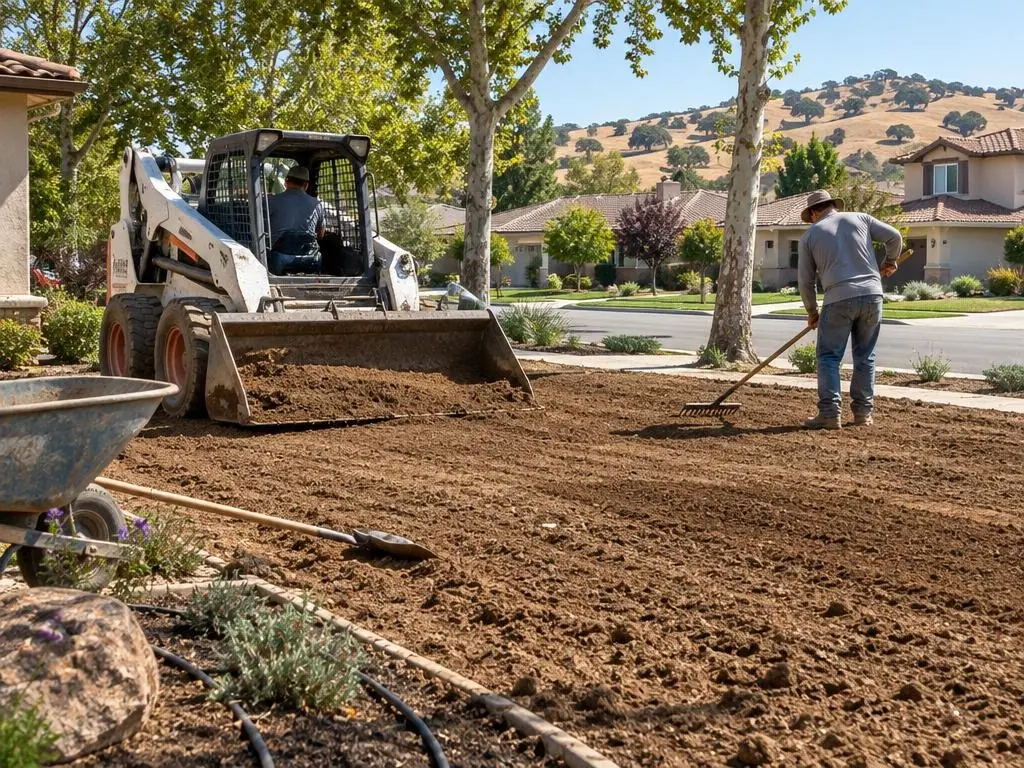
The last step before seeding is fine grading: raking the surface smooth, removing rocks and clods, and setting the final grade so it meets walks, driveways and sprinkler heads at the right height. A surface left too fluffy settles unevenly; one left too hard sheds water and seed. We roll or water-settle the surface when needed, then leave it just loose enough to take seed.
When a permit comes into it
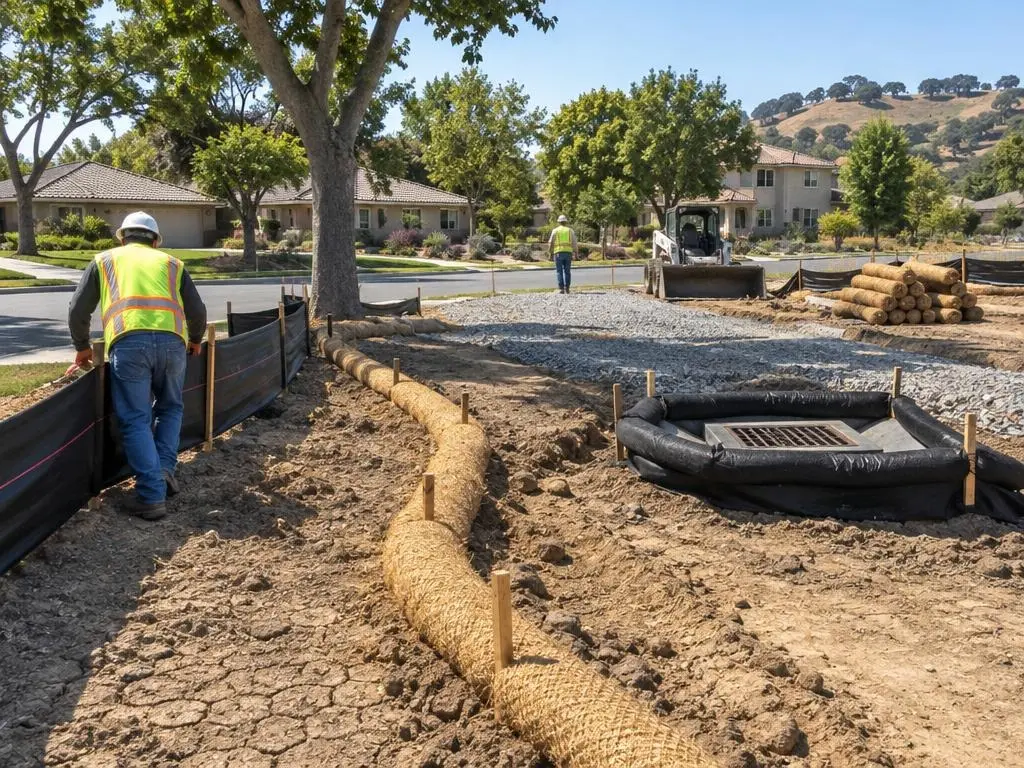
Most lawn regrades are small, but larger dirt work can cross local thresholds. Inside the City of Sacramento, a grading permit is required at 50 cubic yards or a cut or fill deeper than 2 feet. In unincorporated Sacramento County, the permit threshold is 350 cubic yards or clearing an acre or more, and work under the threshold still has to meet the county's erosion standards. Foothill towns and neighboring counties have their own rules. If a job comes close, we say so on the estimate and plan sediment control to match.
Grading around existing features
Most of the yards we grade already have something to work around: a patio slab, a fence line, tree roots, a pool deck or sprinkler mains. We set grades to meet hardscape at the right height, keep fill away from tree trunks, and mark irrigation lines before any machine moves. On smaller backyards with tight gate access, we use compact equipment and hand finishing rather than forcing a large machine through.
Dirt work for foothill lots
Out toward Folsom, El Dorado Hills and Auburn the ground slopes and the soil is often thinner, rockier or redder clay than on the valley floor. Grading there is more about shaping terraces and swales that carry water across the slope gently than about creating a flat lawn. Bare cut and fill on those lots needs erosion cover soon after grading, especially in fall.
Finishing with cover
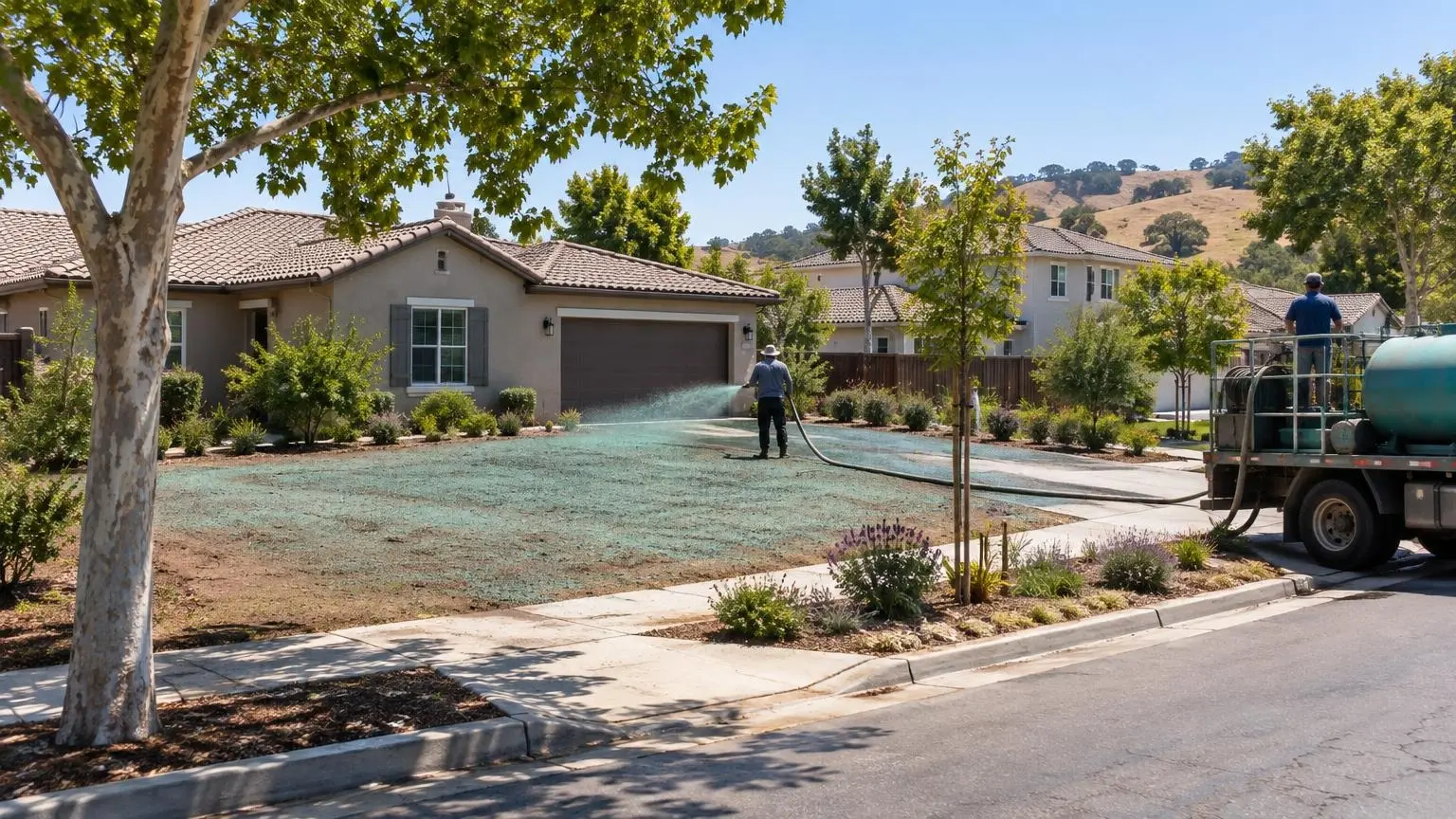
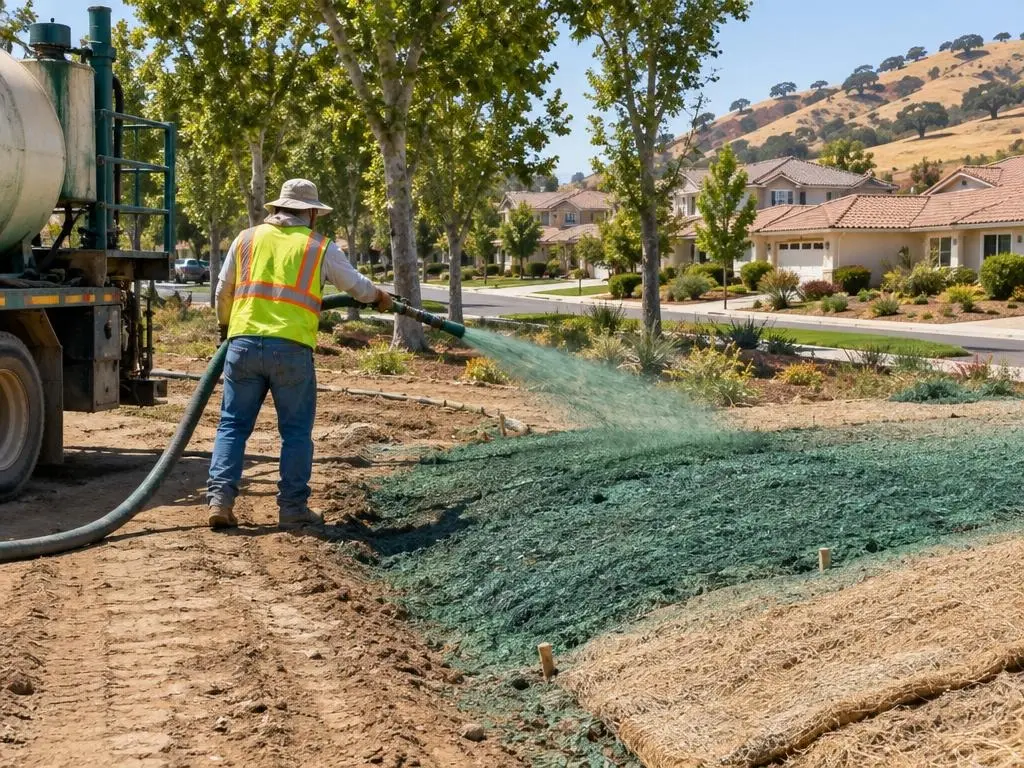
Graded soil is bare soil, and in the rainy season it does not stay put for long. We plan grading so seed or erosion cover follows quickly, ideally within days. On our own lawn jobs, grading and hydroseeding are scheduled back to back. Call (916) 249-7160 to have us look at your yard's grade.
Dirt Work We Handle
From a small backyard reshape to grading a whole lot.
Rough and fine grading
Shaping the yard to drain, then smoothing the surface for seed or sod.
Topsoil delivery and spreading
Screened loam or soil blends spread and worked into the native surface.
Compost and soil amendments
Organic matter tilled into tight clay or scraped builder-lot soil.
Drainage swales
Shallow, seeded channels that carry runoff around the house.
Excavation and trenching for drains
French drains, catch basins and downspout lines dug and backfilled.
Debris and rock removal
Construction scraps, roots and rock cleared before seeding.
Typical Grading and Topsoil Costs
| Item | Typical range (source) |
|---|---|
| Lawn leveling, per sq ft (HomeAdvisor) | $1 to $2 |
| Fine grading, per sq ft (Lawn Love) | $0.08 to $1.00 |
| Residential resloping (Lawn Love) | $770 to $3,000 |
| Topsoil material, per cubic yard (HomeAdvisor) | $12 to $55 |
| Topsoil haul fee, per load of 15 cubic yards or less (Angi) | $50 to $150 |
| Spreading labor, per hour (Angi) | $60 to $125 |
These are national ranges. Access, soil type, haul distance and how much material moves set the cost, and the amount on our written quote is the amount you pay.
How Grading Jobs Run
1. Shoot the grade
We check how the yard falls and where water collects.
2. Plan the fix
Cut, fill, topsoil, drains: written into the estimate.
3. Rough grade
Soil moved and compacted where fill goes in.
4. Topsoil and fine grade
Soil blended in and the surface finished for seed or sod.
5. Cover it
Seed or erosion cover goes on soon after so the grade holds.
Why Choose Us for Yard Grading & Soil Prep
Grading with seeding in mind
We finish the surface the way seed needs it, not just the way a machine leaves it.
Only the soil you need
Topsoil and amendments sized to the yard, not a standard truckload.
Drainage included
Swales and drain trenches handled by the same crew.
Yard Grading & Soil Prep Questions
Do I need topsoil before hydroseeding?
Not always. If the yard has a few inches of workable loam, loosening and amending it is enough. Scraped builder lots and heavy clay usually do better with imported topsoil blended into the surface.
My backyard holds water after rain. Can grading fix it?
Usually, if there is somewhere for the water to go. Where the grade cannot reach the street, a swale or drain line carries it out. Hardpan soil can make low spots worse, so we look at both the surface and what is below it.
Do I need a permit to regrade my yard?
Small regrades usually do not. In the City of Sacramento a permit applies at 50 cubic yards or cuts and fills over 2 feet; in unincorporated Sacramento County, at 350 cubic yards or an acre of clearing. We tell you if a job comes close.
How long after grading can you seed?
Often the same day or the next. We try to keep the gap short so rain or wind do not undo the fine grade.
Yard Grading & Soil Prep Service Areas
- Hydroseeding in Sacramento, CA
- Hydroseeding in Elk Grove, CA
- Hydroseeding in Roseville, CA
- Hydroseeding in Folsom, CA
- Hydroseeding in Rancho Cordova, CA
- Hydroseeding in Citrus Heights, CA
- Hydroseeding in Lincoln, CA
- Hydroseeding in Rocklin, CA
- Hydroseeding in Davis, CA
- Hydroseeding in West Sacramento, CA
- Hydroseeding in Woodland, CA
- Hydroseeding in El Dorado Hills, CA
- Hydroseeding in Granite Bay, CA
- Hydroseeding in Fair Oaks, CA
- Hydroseeding in Carmichael, CA
- Hydroseeding in Orangevale, CA
- Hydroseeding in Loomis, CA
- Hydroseeding in Auburn, CA
- Hydroseeding in Cameron Park, CA
- Hydroseeding in Antelope, CA
- Hydroseeding in Rio Linda, CA
- Hydroseeding in Wilton, CA
- Hydroseeding in Rancho Murieta, CA
Get a Yard Grading & Soil Prep Estimate
Free grading and soil checks before your new lawn goes in.