
New lawns from bare ground
Residential Lawn Hydroseeding in Sacramento, CA
A full lawn from seed at a fraction of sod's price, prepped for valley soil and summer sun.
- No charge to walk your lot, and every quote in writing
- Prep, seed, mulch and erosion control priced as separate lines
- A written watering schedule for the season you seed in
A New Lawn Without Rolling Out Sod
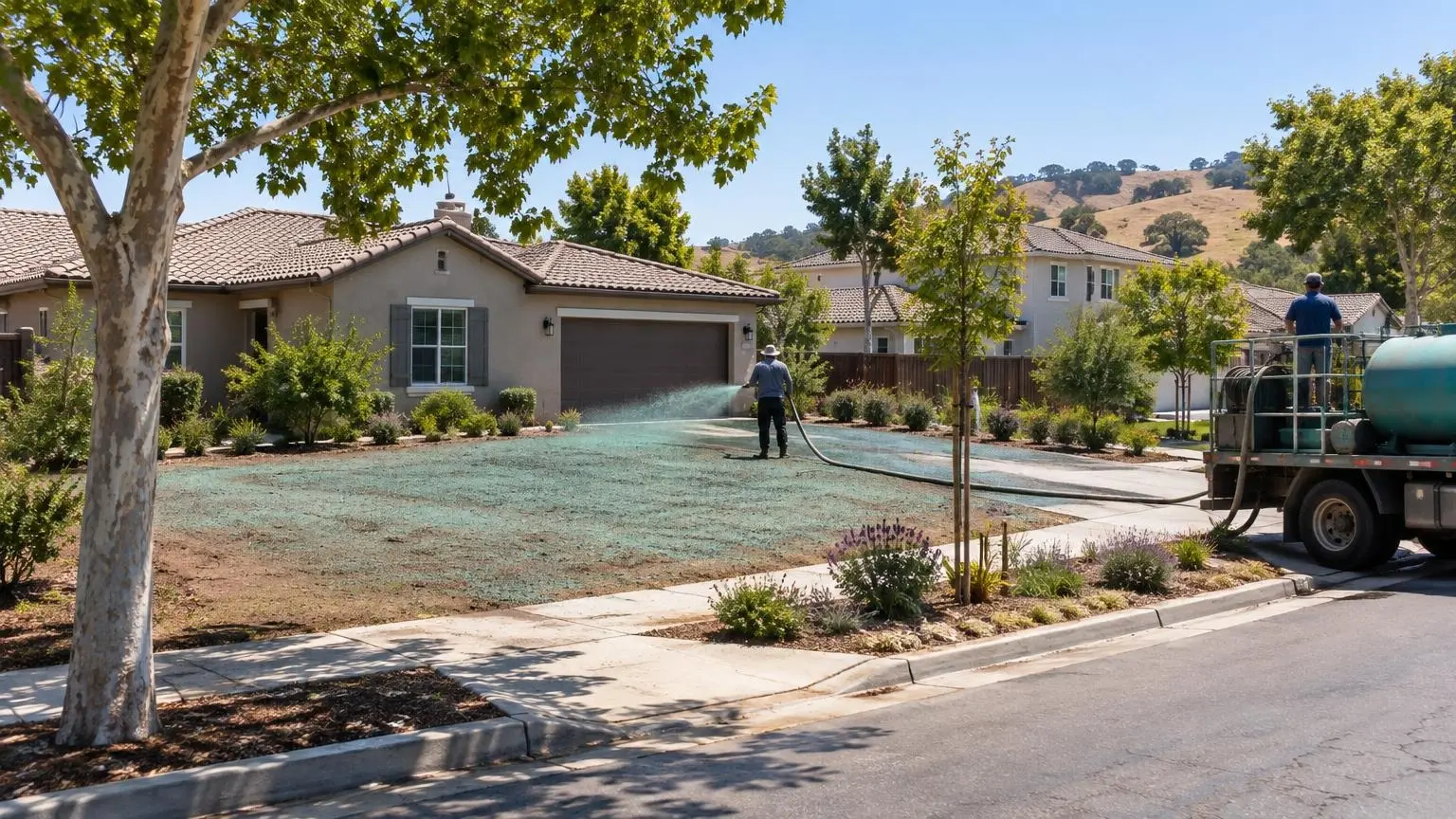
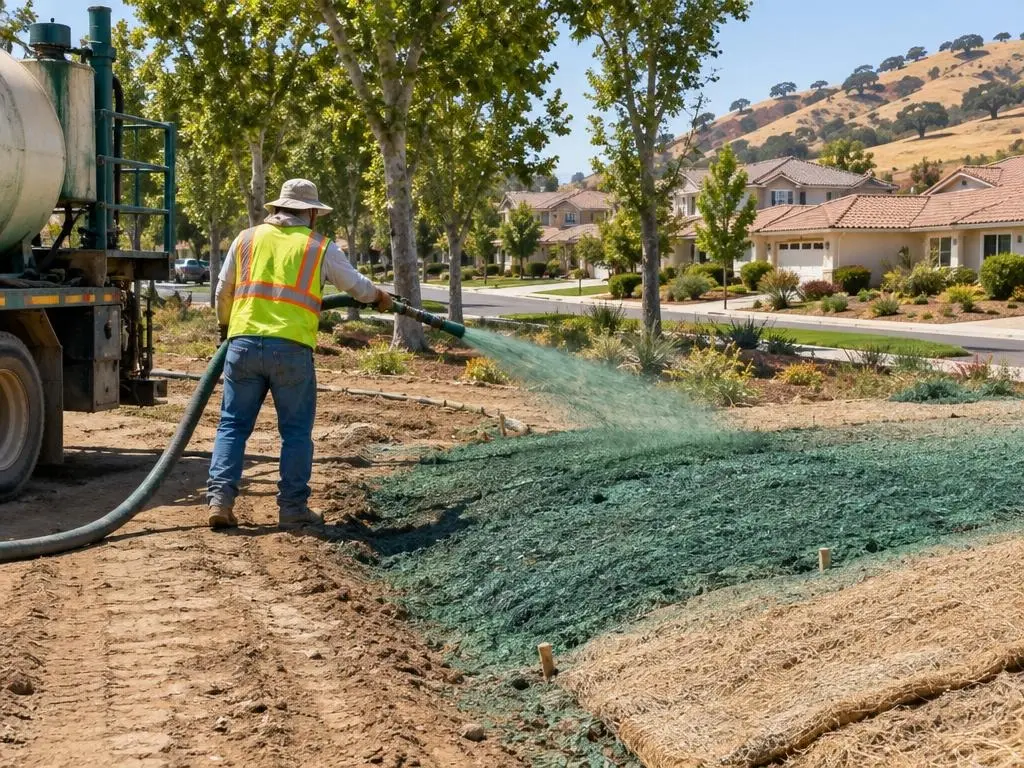
Residential lawn hydroseeding in Sacramento is the most common job we do: a bare yard, a torn-out lawn, or a new tract lot that the builder left as dirt, turned into a hydroseed lawn in one visit, with lawn seeding that skips the sod truck entirely. The crew sprays the prepared soil with grass seed, starter fertilizer, tackifier and wood fiber mulch in one slurry, the green dye shows full coverage, and the mulch keeps the seed damp and in place while it sprouts. For most homeowners it is the middle path between the cost of sod and the slow, patchy results of throwing dry seed by hand.
Who it fits
Hydroseeding is a good match for yards from a few thousand square feet up to an acre, for backyards that sod pallets would have to be carried into by hand, and for side yards and gentle slopes where sod would slip or seed would wash. It also suits anyone willing to keep the ground damp for three weeks. It is a weaker fit for a tiny strip that needs to look finished by Saturday, or for a yard where the sprinklers cannot be fixed before seeding. We would rather tell you that up front than spray a lawn that will not make it to fall.
Getting the soil ready
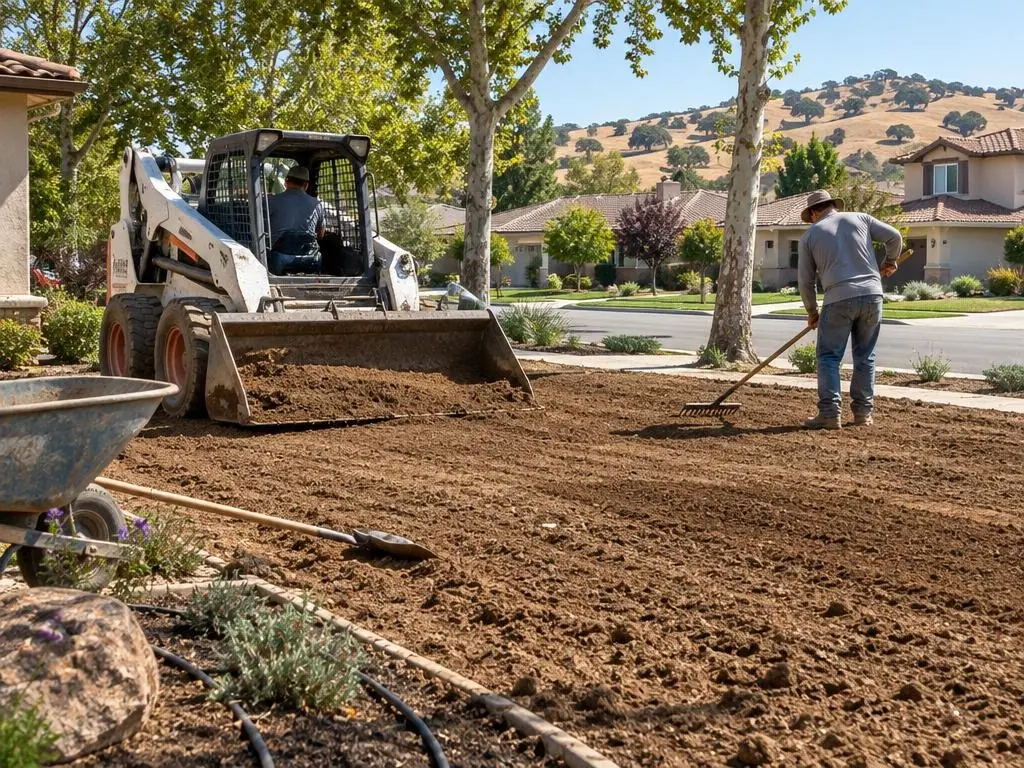
Most of what decides how a new lawn here turns out happens before the truck shows up. On the valley floor, a lot of yards sit on loam over dense clay and hardpan, and builder lots are often scraped and compacted by equipment. We loosen the top few inches, rake out rock, roots and construction debris, and fine-grade so water drains toward the street or a swale instead of toward the house. Where the native soil is thin or full of fill, we bring in topsoil or compost and blend it into the surface. Sprinkler heads are flagged so they can be checked and adjusted before seed goes down, since coverage gaps show up as brown arcs by the second week of summer.
Choosing the seed
The UC Master Gardeners in Sacramento County group lawns as green-in-winter or brown-in-winter. Most homeowners still want the year-round color of a tall fescue blend, sometimes with bluegrass mixed in for faster recovery from wear. Fescue needs steady summer water and does best seeded in early fall. Bermudagrass is the common brown-in-winter choice: it goes dormant and tan from late fall into spring, but it shrugs off heat, needs less water once established, and recovers from dogs and kids quickly. Under heavy tree canopy we use a shade-tolerant fescue blend. We talk through those tradeoffs on the visit instead of picking for you.
Timing and watering
Fescue lawns do best when sprayed from late September into October, with the city's own sediment control manual naming mid-October through mid-April as the best time for permanent planting. Bermudagrass wants warm soil, so we seed it from late spring into early summer. Whatever the season, the first three weeks are about keeping the mulch damp: in summer that can mean three or four short cycles a day, while in fall the cooler nights and early rain do some of the work. Once the grass is up and filling in, waterings get longer and less frequent so roots chase moisture down. We leave a written schedule for the month you seed in.
What it costs and what changes the price
National guides give a wide spread for hydroseeding cost, from about seven cents to thirty-five cents a square foot depending on the source, with minimum charges common on small yards. The bigger swings come from prep: how much grading the yard needs, whether topsoil has to be hauled in, whether old turf or weeds have to be removed first, and whether part of the yard is a slope. That is why we price prep and seeding as separate lines on the estimate. You can compare it against sod, which national guides put well above hydroseed per square foot.
Hydroseed lawn versus the alternatives on your lot
Sod gives you instant grass, and on a small, shaded front strip it can be worth it, but national guides put it at several times the cost of hydroseed per square foot, and its seams need water every day through the first heat to knit into the native soil. Dry seed spread by hand costs the least in material, but on a bare, sunny Sacramento yard the seed sits exposed to sparrows, wind and sun, and comes up unevenly. Hydroseed keeps seed, mulch and fertilizer together in one layer that holds moisture, which matters most in the months when the afternoon sun dries soil in hours. Grass seeding by hydro mulching also coats corners, curves and gentle slopes evenly. For new lawn installation on a typical tract lot, that balance of price and reliability is why most homeowners pick it.
Front yards, backyards and HOAs
Front lawns on new subdivisions often have a deadline: a builder walkthrough, an HOA landscaping rule or a home sale. We can schedule around that, and we will tell you honestly how green the lawn will look on a given date. Backyards are usually less rushed, and it can pay to wait a few weeks for cooler weather rather than seed into the worst of summer.
After the spray
Expect green fuzz in about a week in warm weather, a first mowing at four to six weeks when the grass is a few inches tall, and a lawn ready for normal use after a few more mowings. Thin spots usually come from a sprinkler gap or a low spot that stayed too wet, and if something does not fill in, call us and we will look at why. Call (916) 249-7160 to set up a visit.
What a Lawn Job Includes
The estimate breaks every one of these out on its own line.
Soil loosening and fine grading
Breaking up compacted surface soil and shaping the yard to drain away from the house.
Topsoil and compost blending
Imported soil or compost worked into thin, rocky or scraped builder-lot ground.
Tall fescue lawn mixes
Green-in-winter blends for full-sun and partly shaded yards.
Bermudagrass lawns
Heat-tolerant, lower-water turf that goes tan in winter.
Shade blends under trees
Fescue mixes chosen for yards under street and backyard canopy.
Irrigation check
Heads flagged and coverage checked so dry arcs get fixed before seeding.
Written watering plan
A schedule written for the season and the grass you chose.
Typical Hydroseeding Cost for a Home Lawn
| Job | Typical range (source) |
|---|---|
| Hydroseeding per square foot (HomeGuide) | $0.12 to $0.35 |
| Hydroseeding per square foot (Angi) | $0.07 to $0.26 |
| 5,000 sq ft lawn (HomeGuide) | $1,000 to $1,750 |
| 1/4 acre lawn (HomeGuide) | $1,900 to $2,800 |
| Minimum job charge (LawnStarter) | $300 to $500 |
| Steep slope add-on (HomeGuide) | $0.05 to $0.10 per square foot |
| Sod for comparison (HomeAdvisor) | $0.35 to $0.85 per sq ft |
Published ranges are national figures, not Sacramento quotes. Slope, access, soil prep and lot size change every job, and after we walk the yard you get a written figure that we stick to.
From Bare Dirt to First Mow
1. Site visit
We measure, check drainage and sprinklers, and talk through seed choices.
2. Written estimate
Prep, topsoil, seed and mulch priced on separate lines.
3. Prep and grade
Soil loosened, debris removed, grade shaped to drain, amendments mixed in.
4. Spray
One pass of the hose lays the tinted mix of seed, fertilizer, tackifier and mulch down in an even coat.
5. Water and first mow
You follow the written schedule; first mowing usually comes at four to six weeks.
Why Choose Us for Residential Lawn Hydroseeding
Prep comes first
We spend the time on grading and soil because that is where new lawns here succeed or fail.
Seed matched to the yard
Fescue, Bermudagrass or a shade blend, picked for sun, use and water budget.
Honest about sod
If sod or a later date suits your yard better, we say so.
Residential Lawn Hydroseeding Questions
What does a new hydroseeded lawn run in Sacramento, and what drives the hydroseeding cost?
National cost guides land between $0.07 and $0.35 a square foot, and HomeGuide's figure for a 5,000-square-foot lawn is $1,000 to $1,750. Grading, topsoil and slopes add to that. Once we have walked the yard, you get an itemized estimate in writing.
Fescue or Bermudagrass for a Sacramento lawn?
Fescue stays green all year but needs regular summer water and fall seeding. Bermudagrass handles heat, drought and heavy use but goes tan from late fall to spring. Shade usually rules Bermudagrass out.
When can my dog go on the new lawn?
Hold pets off the new grass until it has had two or three mowings, which usually lands six to eight weeks after seeding. Earlier traffic pulls seedlings out and leaves bare paths.
Do I have to remove my old lawn first?
If it is mostly weeds or Bermudagrass you no longer want, yes, or the old grass will outcompete the new seed. A lawn that is just thin can often be overseeded instead.
What if part of the lawn does not come up?
Bare patches usually trace back to a sprinkler gap, a wet low spot or traffic. Call us and we will look at the cause and the fix.
Residential Lawn Hydroseeding Service Areas
- Hydroseeding in Sacramento, CA
- Hydroseeding in Elk Grove, CA
- Hydroseeding in Roseville, CA
- Hydroseeding in Folsom, CA
- Hydroseeding in Rancho Cordova, CA
- Hydroseeding in Citrus Heights, CA
- Hydroseeding in Lincoln, CA
- Hydroseeding in Rocklin, CA
- Hydroseeding in Davis, CA
- Hydroseeding in West Sacramento, CA
- Hydroseeding in Woodland, CA
- Hydroseeding in El Dorado Hills, CA
- Hydroseeding in Granite Bay, CA
- Hydroseeding in Fair Oaks, CA
- Hydroseeding in Carmichael, CA
- Hydroseeding in Orangevale, CA
- Hydroseeding in Loomis, CA
- Hydroseeding in Auburn, CA
- Hydroseeding in Cameron Park, CA
- Hydroseeding in Antelope, CA
- Hydroseeding in Rio Linda, CA
- Hydroseeding in Wilton, CA
- Hydroseeding in Rancho Murieta, CA
Get a Residential Lawn Hydroseeding Estimate
Free site visits for new lawns anywhere in the Sacramento area.