
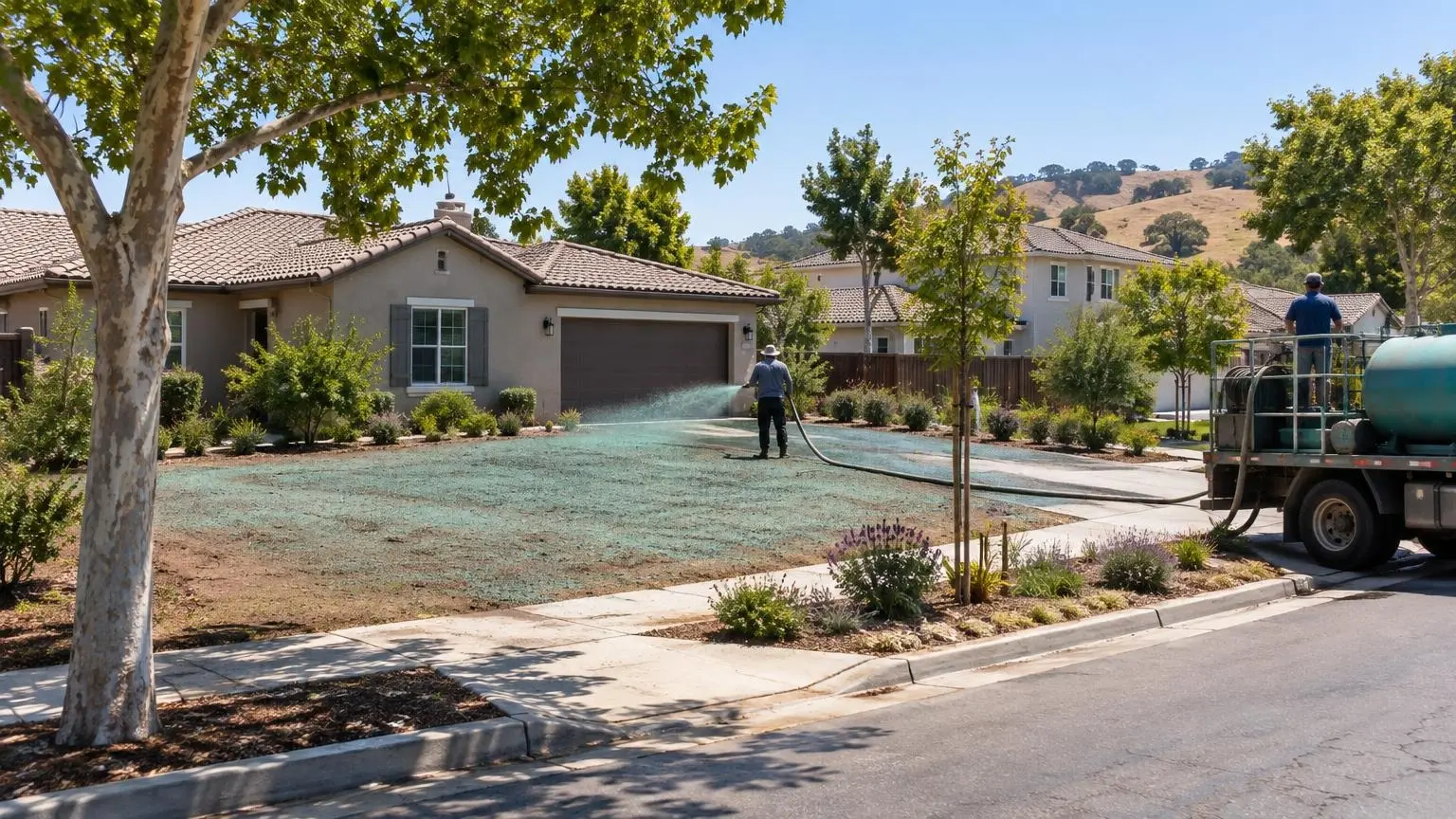
Keep the dirt on the lot
Silt Fence & Sediment Control in Sacramento, CA
Perimeter controls and inlet protection installed before ground breaks and kept working through the wet season.
- No charge to walk your lot, and every quote in writing
- Prep, seed, mulch and erosion control priced as separate lines
- A written watering schedule for the season you seed in
Stopping Sediment Before It Reaches the Gutter
Silt fence & sediment control in Sacramento is the part of a construction project nobody notices until it fails. We install silt fence, fiber rolls, storm drain inlet protection and related controls on residential builds, additions, pools, commercial pads and subdivisions, so muddy runoff stays on the site instead of washing into the street and down the storm drains. As silt fence contractors we also come back to repair, extend and finally remove the controls as the job moves along.
Why it matters here
Sacramento's storm drains lead to its rivers, and the city sits where the American River joins the Sacramento. Almost all of the year's rain falls between November and April, so a site that was dusty in September can be sending brown water to the gutter by November. Muddy water in the street is the most visible sign of a site out of compliance, and it is what inspectors and neighbors notice first. Sediment control is cheaper than cleanup, fines or a stop-work order.
When it is required
California's State Water Resources Control Board requires Construction General Permit coverage whenever a project disturbs at least an acre, or is one phase of a bigger common plan that will. Those sites need a stormwater pollution prevention plan, and the plan spells out perimeter controls, inlet protection and entrances. Smaller jobs are not off the hook. Inside Sacramento city limits a grading permit is needed once grading reaches 50 cubic yards or a cut or fill goes deeper than 2 feet, and unincorporated Sacramento County requires one at 350 cubic yards or an acre of clearing. Even exempt work is expected to keep sediment on the property. We install to the plan when there is one, and recommend a sensible layout when there is not.
Getting silt fence installation right on valley and foothill lots
The fence only does its job when it goes in the way it was designed. The fabric's bottom edge is buried in a trench and backfilled so water cannot run under it, posts go on the downhill side, and the fence follows the contour rather than running straight down a slope where it would funnel water. The ends turn uphill so runoff cannot simply go around. Silt fence is meant to slow sheet flow and let sediment settle. It is not a dam for concentrated flow from a swale or downspout, and when it is used that way it blows out. On flat valley lots, fence usually runs along the low edges of the property and behind the curb. On sloped foothill sites we add rows across long slopes or switch to fiber rolls.
Fiber rolls, inlets and entrances
Fiber rolls, sometimes called wattles, are tubes of straw or other fiber staked along the contour. They are handy on slopes, around stockpiles, and along sidewalks where trenching for silt fence is not possible. Storm drain inlet protection, from fabric and gravel-bag barriers to drop-in devices, catches what gets past the perimeter before it enters the pipe. Stabilized construction entrances of rock over fabric keep trucks from tracking mud into the street. We size each piece to the site.
Through the rainy season
Sediment controls are not set-and-forget. Fence gets knocked down by equipment, sediment builds up behind it, and fiber rolls shift. Under the state permit, larger sites must inspect and maintain their controls, and we offer repair visits ahead of forecast storms and after big ones: resetting fence, cleaning out sediment, replacing damaged inlet protection. The City of Sacramento sediment control manual also asks that hydroseed go down at least a day before forecast rain, so when it is time to stabilize bare ground with seed, we coordinate that with the fence work.
Homeowner projects
Sediment control is not only for subdivisions. A pool dig, a room addition, a new driveway, or a backyard regrade before hydroseeding can all leave bare soil next to the street, and one storm can put a layer of mud across the sidewalk and into the gutter. For jobs like these we often use fiber rolls along the curb and a protected inlet at the nearest drain, then stabilize the bare ground with seed as soon as the work is done. That is usually enough to keep the street clean without a full perimeter fence.
Working alongside other trades
On active sites, fence and rolls get moved for deliveries, utility trenches and grading. We coordinate with the superintendent so controls are reset the same day they are disturbed, and we flag spots where the layout no longer matches the way the site now drains.
Taking it out
When the site is paved, landscaped or seeded and the vegetation has taken, perimeter controls come out. We remove fence and rolls, spread or haul off the trapped sediment, and seed the strips the fence occupied so they do not become the next bare spot. Call (916) 249-7160 to set up a site layout.
Sediment Control Services
Installed, maintained and removed through the life of the project.
Silt fence installation
Trenched, staked fence along contours and property lines.
Fiber rolls (wattles)
Staked rolls on slopes, around stockpiles and along walks.
Storm drain inlet protection
Fabric, gravel bag and drop-in devices at curb and area drains.
Stabilized construction entrances
Rock pads that keep mud off the street.
Storm-ready maintenance
Resetting fence and cleaning out sediment before and after rains.
Removal and final seeding
Controls pulled and their footprint seeded at closeout.
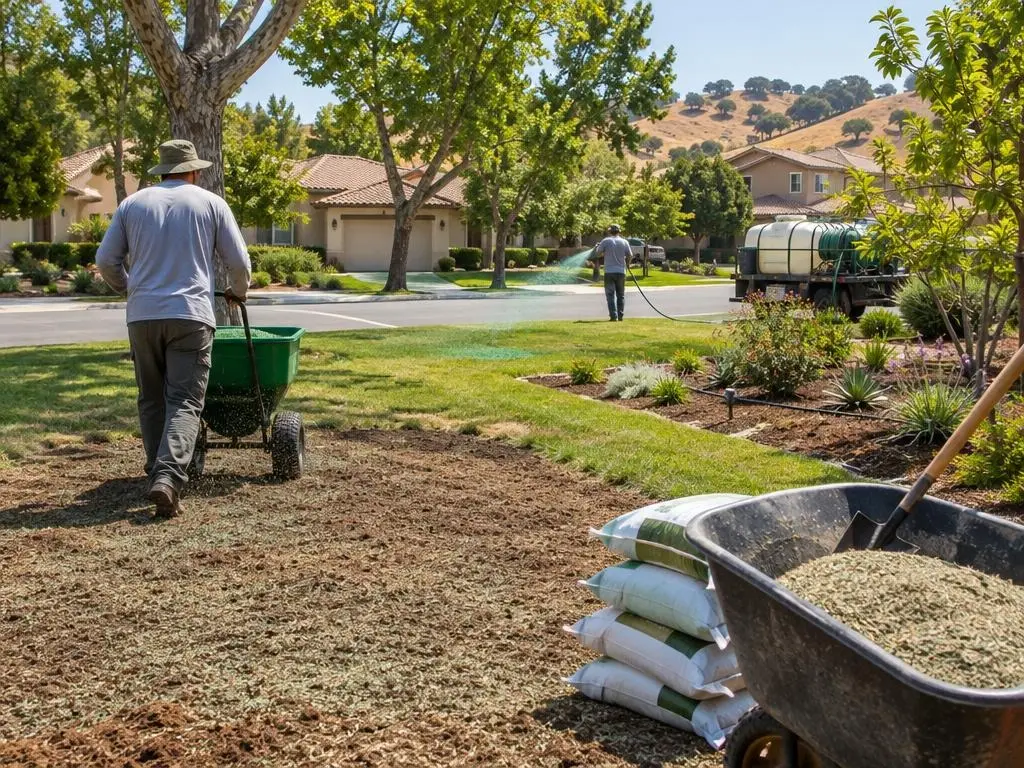
Typical Sediment Control Costs
| Item | Typical range (source) |
|---|---|
| 2025 DOT erosion pay items: silt fence without stabilization, each 100 linear ft | $378 |
| Silt fence, stabilized, per 100 ft (same 2025 schedule) | $748 |
| Silt-fence barrier around a storm inlet, per inlet (same list) | $102 |
| Inlet protection, sandbag, each (same 2025 schedule) | $141 |
| Gravel-and-mesh inlet protection, per inlet (same list) | $172 |
| Stabilized construction entrance | Set once we measure the entrance |
These rates come from 2025 public-works installs, not Sacramento bids. Fence length, access, soil and how long the controls have to stay up all affect what a job costs. Published averages; we quote each property in writing and stick to it.
Setting Up a Site
1. Review the plan
We read the SWPPP or erosion plan, or recommend a layout if there is none.
2. Walk the grades
We mark low edges, inlets and where water concentrates.
3. Install
Fence trenched and staked, rolls set, inlets protected, entrance built.
4. Maintain
Repairs and cleanout around forecast storms.
5. Remove and seed
Controls taken out at closeout and the strips stabilized.
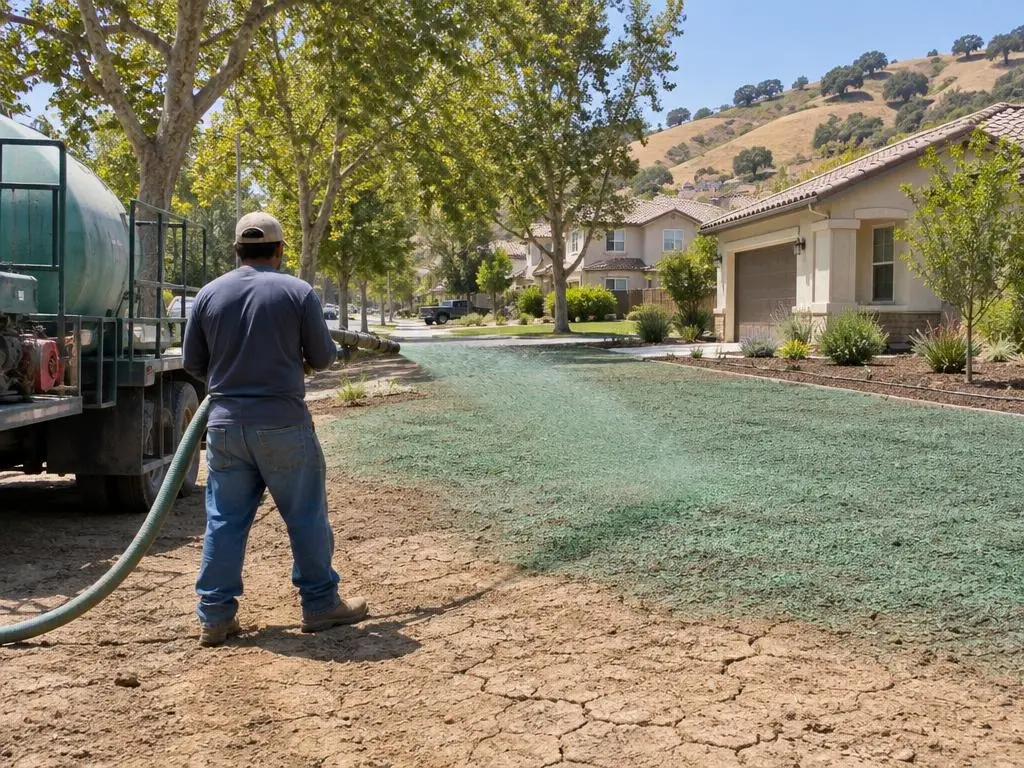
Why Choose Us for Silt Fence & Sediment Control
Installed to work
Trenched fabric, posts downhill and ends turned up, not fence stapled to the surface.
One crew for fence and seed
We can stabilize bare ground with hydroseed when the controls go in or come out.
Wet-season visits
Maintenance timed around the storms that test the controls.
Silt Fence & Sediment Control Questions
Does a Sacramento backyard regrade or remodel need sediment barriers?
If the work involves grading or exposes soil that could wash to the street, some sediment control is expected, and permitted grading usually requires it. Small jobs can often use fiber rolls and inlet protection instead of full perimeter fence.
How long does silt fence last?
It can last through a season or more if it is maintained. Equipment damage and sediment buildup are what usually take it out of service, so we inspect and repair it around storms.
Silt fence or fiber rolls?
Silt fence works well along flat perimeters where it can be trenched in. Fiber rolls suit slopes, hard surfaces and tight spots where trenching is not practical. Many sites use both.
Who removes the silt fence at the end?
We do, once the site is paved or vegetated. The trapped sediment is spread or hauled and the fence line seeded.
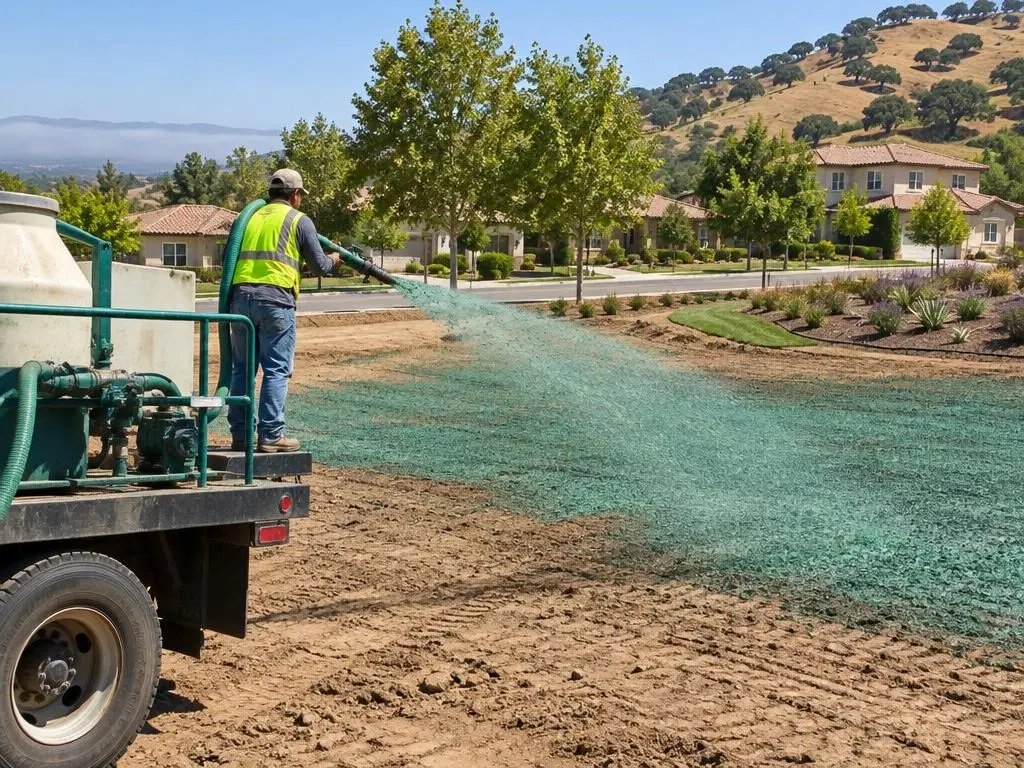
Silt Fence & Sediment Control Service Areas
- Hydroseeding in Sacramento, CA
- Hydroseeding in Elk Grove, CA
- Hydroseeding in Roseville, CA
- Hydroseeding in Folsom, CA
- Hydroseeding in Rancho Cordova, CA
- Hydroseeding in Citrus Heights, CA
- Hydroseeding in Lincoln, CA
- Hydroseeding in Rocklin, CA
- Hydroseeding in Davis, CA
- Hydroseeding in West Sacramento, CA
- Hydroseeding in Woodland, CA
- Hydroseeding in El Dorado Hills, CA
- Hydroseeding in Granite Bay, CA
- Hydroseeding in Fair Oaks, CA
- Hydroseeding in Carmichael, CA
- Hydroseeding in Orangevale, CA
- Hydroseeding in Loomis, CA
- Hydroseeding in Auburn, CA
- Hydroseeding in Cameron Park, CA
- Hydroseeding in Antelope, CA
- Hydroseeding in Rio Linda, CA
- Hydroseeding in Wilton, CA
- Hydroseeding in Rancho Murieta, CA
Get a Silt Fence & Sediment Control Estimate
Sediment control layouts and installs for builders and homeowners.